Creativity is a box in which we put our sources and experiences. The more things we have, the better we use the box. This box has no limits. It is like a custom-made toolbox that one can always add a part to. Creativity is defined in the science world, but definitions have changed as new research outcomes emerged, like the box that can be changed. Yet, there is one main term used that we can focus on: authenticity. Being honest, knowing, and expressing oneself in the most authentic way is the key. It is the main material of the box that can be modified. So how does creativity show itself? Like change, creativity sparks and starts within ourselves.
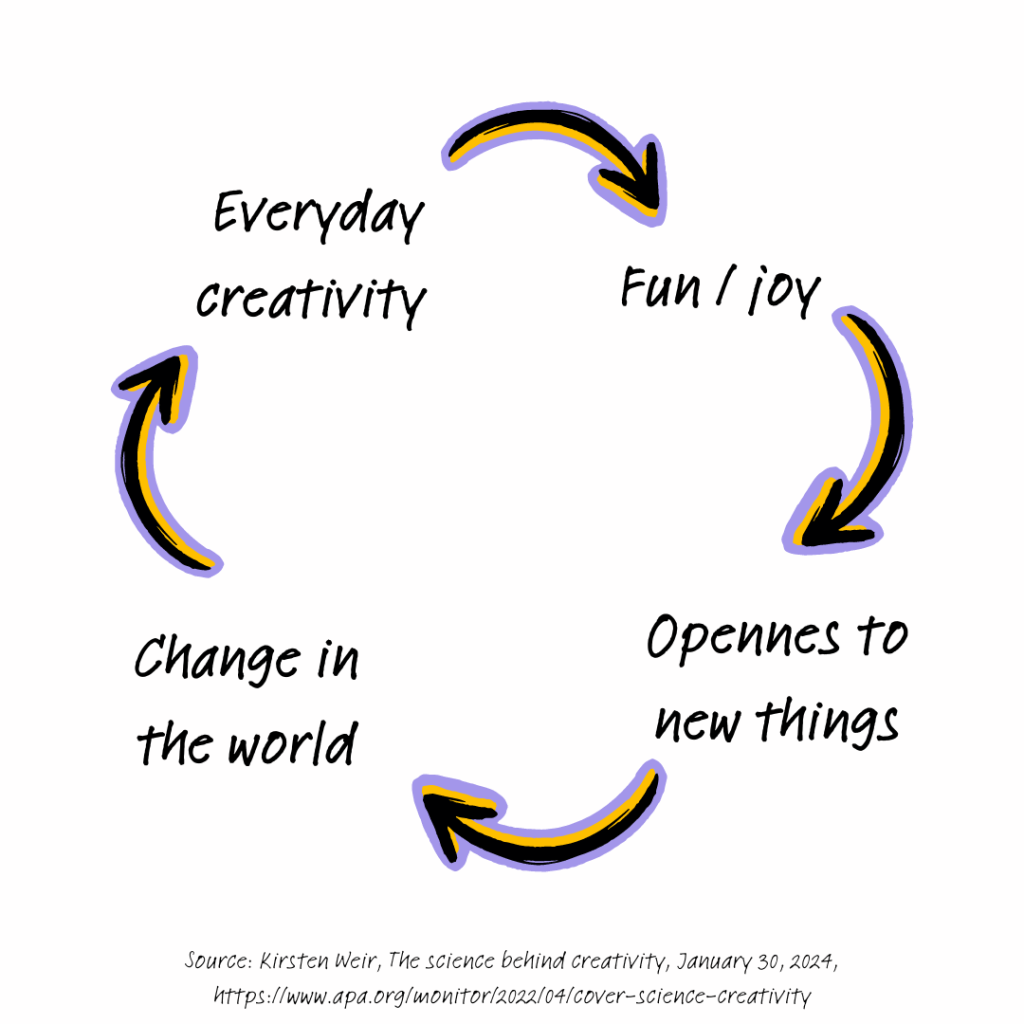
One of the most daily and practical approaches is using creativity daily. Yet, what does this mean? Creativity is a skill. It’s not something famous painters or other artists have in common that we don’t. It has a simple logic: everyday creativity brings joy and fun out of our lives, and we feel closer to openness to new things and start the change in the world. This is a cycle. Arrows guide us to the same place that we started from, using everyday creativity. There are two points that caught my attention: changing the world and its connections with the famous artists and people I mentioned above. Change may seem very big and hard to reach, but change is the reflection of individual steps toward it. Change starts within ourselves. We cannot change anything without putting ourselves into the equation. Indeed, we are the change. Our behaviors, way of thinking, and approaches create the change. Think of seeing the Mona Lisa; it is very inspiring. You cannot understand how she looks. Moreover, it is a very small painting that has a very long line of visitors. This is the cycle I am writing about. One man draws a portrait of a woman, and people who enjoy art visit it almost every day for a very long time. Not only does Da Vinci become part of the creativity cycle, but also the visitors who are inspired by their French trip. (1)
Going back to the scientific point of view, creativity is based on two systems. The first one is our famous “aha” moments. They are like notifications from our phones. They may appear whenever they are ready, like an email. However, they may not always be useful as you imagine. Since our brains don’t categorize our experiences and knowledge as we do, all of them are very important. They are that important because they are coming from us. Until you redefine them, the system doesn’t see the negative connection. Those emails may be from a shop you don’t like or someone who brings very good or bad news. That is why the second system comes up: refining the “aha” moment. This is where you think about possible outcomes and effects in the long run. (2)
How can we be more creative?
There are several ways: thinking inside the box, using and listening to your insights, being grateful, focusing on mindfulness, doing exercises, and getting a good night’s rest. Being grateful, focusing on mindfulness, doing exercises, and having a good night’s rest are more explanatory enough to see the relationship, but thinking inside the box and using insight can be explained a little more. (3)
You can think of thinking inside the box as improvisation. You have to start from somewhere. You cannot finish a painting or write a great book ending in the first try. It is a process. Every poem starts with a word. Yes, you can always edit it, but you must be in the creative process to have a flow. Using and listening to your insight is more simple. Sometimes the little voice in our mind tells us something. Something that is very interesting. Before avoiding it, give it a chance to explain itself. They may be useful for you. Of course, you may not find it useful, then thank that voice and smile to it every time it says something to you. You may not know when it will help you. (4)
But why is being creative fun?
It is fun because you have a box of imagination, useful sources, and things you enjoy the most. It is like seeing a unicorn. Not only seeing it but also having it as a pet. The word magic doesn’t have a very complicated meaning. It is being able to create things.
Putting all these into consideration, creativity is like a box that we customize ourselves. It has many designs and sizes. Being authentic and curious improves this skill. One thing matters the most: using it joyously and for our self-development. I know this article is long enough to read; I didn’t plan to write this long 😇, therefore I will end it very soon. However, I would like to ask some questions that may enrich your creativity: Which activities do you enjoy the most? Especially which of them make you more creative? What can you add to these activities?
Thank you,
Serra İspahani ☺️
References
(1) Kirsten Weir, The science behind creativity, January 30, 2024, https://www.apa.org/monitor/2022/04/cover-science-creativity
(2) Kirsten Weir, The science behind creativity, January 30, 2024, https://www.apa.org/monitor/2022/04/cover-science-creativity
(3) Ingrid Fetell Lee, Can’t seem to meditate? 7 joyful activities for you to try instead, Jan 11, 2022, https://ideas.ted.com/cant-seem-to-meditate-7-joyful-activities-for-you-to-try-instead/
(4) Ingrid Fetell Lee, Can’t seem to meditate? 7 joyful activities for you to try instead, Jan 11, 2022, https://ideas.ted.com/cant-seem-to-meditate-7-joyful-activities-for-you-to-try-instead/
 Thingsbyserra